

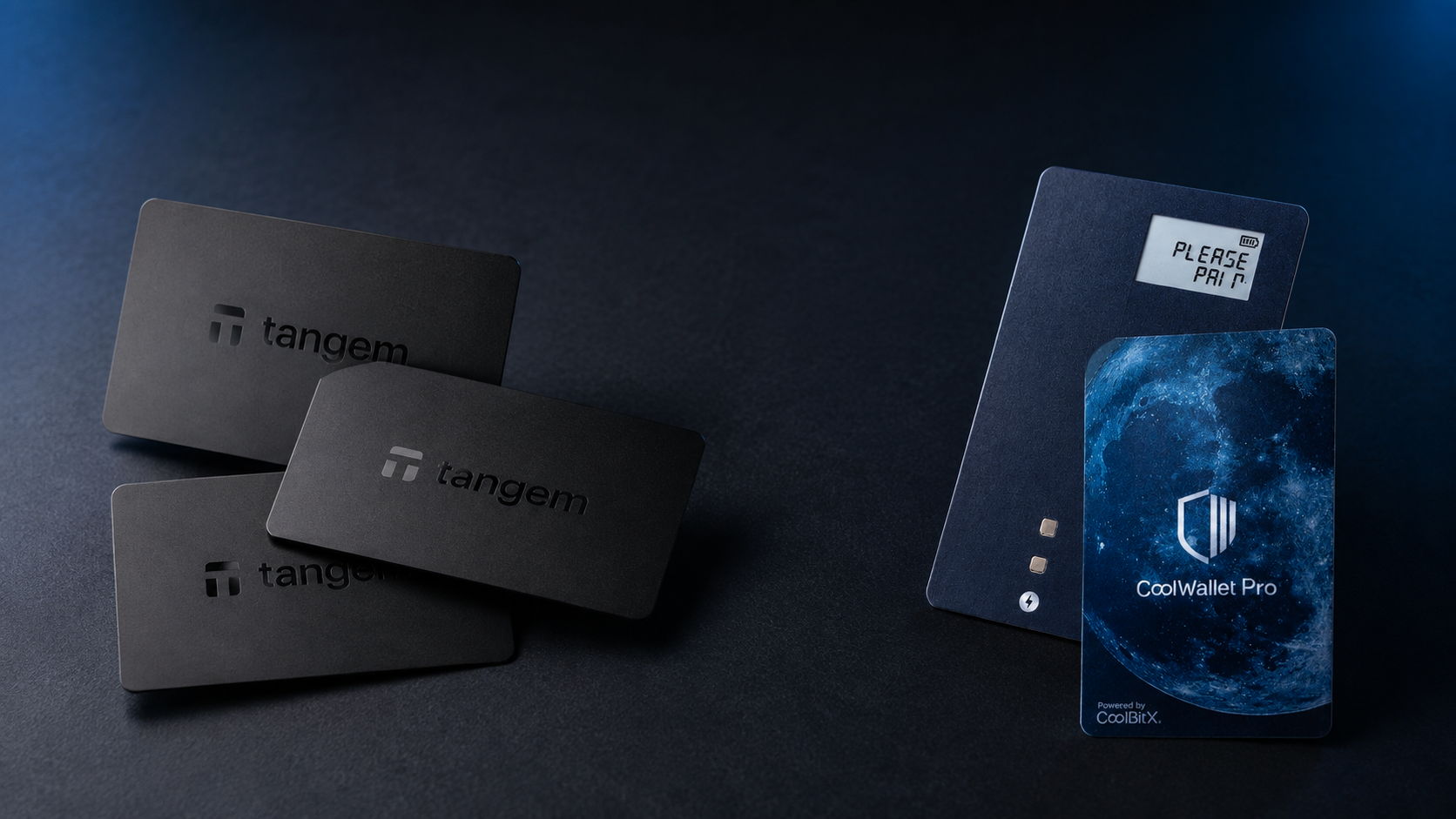
Tangem and CoolWallet Pro both use a card-shaped design, but the experience is very different. Tangem is a battery-free NFC wallet built around simplicity and multiple backup cards. CoolWallet Pro adds a display, button, rechargeable battery and Bluetooth, giving users an independent place to review and confirm transactions.
Quick verdict
- Choose Tangem for the simplest tap-to-use mobile workflow and no charging.
- Choose CoolWallet Pro if you want a screen and physical button in a slim card.
- Tangem backups use extra cards; CoolWallet uses a conventional recovery seed.
- Both are mobile-first: confirm phone compatibility and supported networks before buying.
Two card wallets with different priorities
Tangem cards have no screen, button, port or battery. A tap against the phone powers the secure chip and authorizes the requested action. CoolWallet Pro is also credit-card sized, but includes an e-paper display, confirmation button, Bluetooth and a rechargeable battery. Tangem feels closer to a contactless bank card; CoolWallet feels like a conventional hardware wallet made thinner.
How transactions are reviewed and confirmed
With Tangem, the phone displays the address, network and amount, then the card is tapped to authorize. With CoolWallet Pro, the app prepares the transaction and the hardware screen provides a separate place to review key details before pressing the button. Users who want an independent trusted display may prefer CoolWallet; users who prioritize fewer steps may prefer Tangem.
Backup and recovery
Tangem commonly uses two or three cards linked to the same wallet. Any card can act as a backup, and the setup can also offer a seed-based option depending on the chosen process. CoolWallet Pro follows a more traditional recovery-seed model. Neither approach is automatically better: multiple cards reduce the need to handle words, while a standard seed offers broader portability but must be protected offline.
Security trade-offs
Both products keep private keys in protected hardware. Tangem minimizes components and attack surface, but relies on the phone for transaction display. CoolWallet provides hardware confirmation, but adds a battery and Bluetooth stack that must be maintained. In either case, the most common real-world risks remain phishing, an exposed recovery backup and approving the wrong network or address.
Tangem vs CoolWallet Pro
| Area | Tangem | CoolWallet Pro |
|---|---|---|
| Connection | NFC | Bluetooth |
| Screen | No | Yes |
| Battery | No | Rechargeable |
| Confirmation | Tap card | Physical button |
| Typical backup | Additional cards | Recovery seed |
| Best for | Maximum simplicity | Independent hardware review |
Compare the products


CoolWallet
- E-paper display and physical button
- Encrypted Bluetooth connection
- Rechargeable slim card design
Which one suits you?
Pick Tangem if you want a phone-first wallet with almost no device maintenance. Pick CoolWallet Pro if seeing transaction information on separate hardware matters more than avoiding charging. Before deciding, check the exact coin, network and mobile operating system you plan to use.
Frequently asked questions
Is NFC safer than Bluetooth?
The connection type alone does not decide security. The chip design, authorization process, phone hygiene and backup handling all matter.
What if a Tangem card is lost?
Use another linked card. Store cards separately so one incident cannot remove every access method.
What if CoolWallet's battery runs flat?
Recharge it before use. The recovery seed remains the ultimate backup if the device can no longer operate.



Share:
Ledger or Trezor: Which Hardware Wallet Brand Fits Your Workflow?
Trezor Safe 3 vs Ledger Nano S Plus: Which Entry-Level Wallet Is Better?