

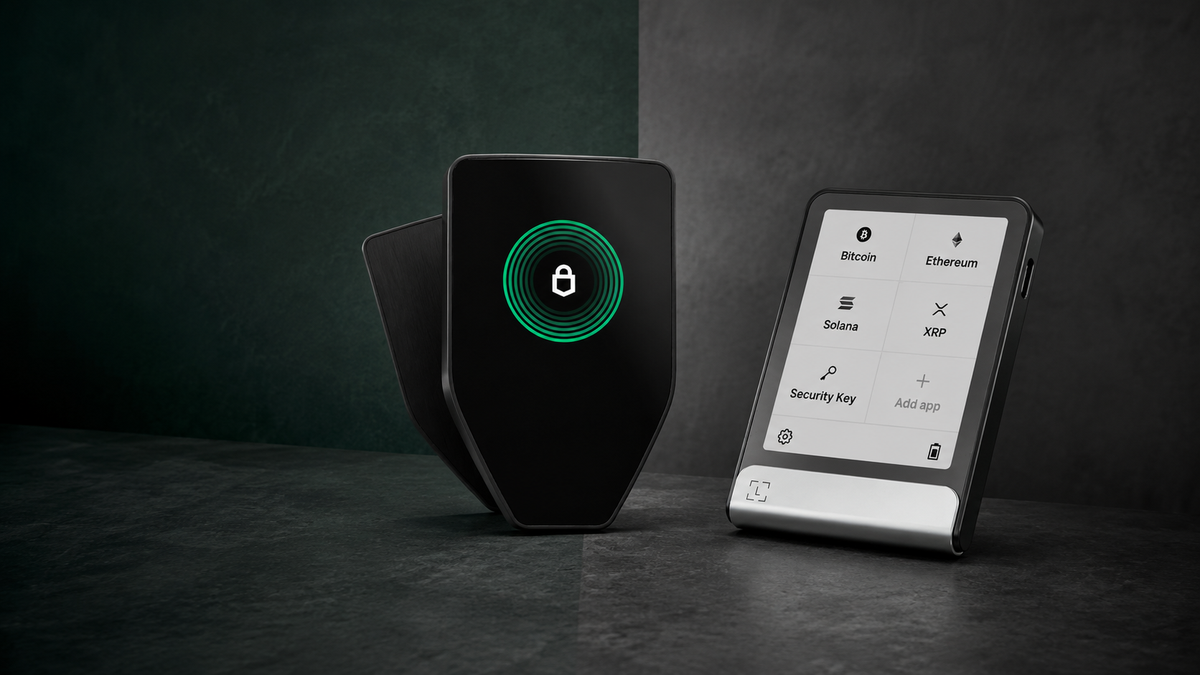
Ledger and Trezor both make established hardware wallets, but choosing between them is less about finding a universal winner and more about matching the ecosystem to your habits. Ledger emphasizes broad asset support and polished hardware. Trezor emphasizes open-source transparency and a setup process that is easier to inspect and explain.
Quick verdict
- Trezor is our default recommendation for most beginners: the open-source core and Trezor Suite make self-custody easier to understand.
- Ledger can be the better fit for specific assets: its ecosystem generally offers broader coin and application support.
- Both use dedicated hardware protection: the recovery seed and transaction checks remain the owner's responsibility.
- Choose by workflow: compare phone compatibility, screen, connection and the exact assets you hold.
The practical difference between Ledger and Trezor
Both brands keep private keys on a dedicated device and require physical confirmation. The day-to-day difference comes from the software model. Trezor Suite is deliberately focused and guides users through setup, backup verification and accounts. Ledger Wallet supports a wide range of networks and services, but users may need to install coin apps or connect third-party wallets.
Security architecture and open-source transparency
Trezor publishes the core firmware and software for public review. Current Safe models combine that transparency with Secure Element protection. Ledger also relies on Secure Elements, but important firmware components remain proprietary. Closed source is not automatically unsafe, yet it gives the public less visibility into implementation details.
For a new user, the ability to study how recovery and signing work is a meaningful advantage. It does not remove risk: either brand can be undermined if the recovery seed is exposed or the owner approves a malicious transaction.
Trezor Suite and Ledger Wallet
Trezor Suite keeps the core journey in one clear application and is particularly approachable for Bitcoin and major assets. Ledger Wallet offers a broader service layer and many integrations. People who prefer fewer decisions often find Trezor calmer; advanced users who depend on a particular chain or app may find Ledger more flexible.
Coin support and third-party wallets
Ledger generally covers more assets. Trezor supports major coins and tokens, but buyers should verify the exact asset, network and required interface. A headline number is not enough: USDT on Ethereum, Tron and Solana are different network workflows even though the ticker is the same.
Ledger vs Trezor at a glance
| Area | Trezor | Ledger |
|---|---|---|
| Core software | Open source | Partly proprietary |
| Secure Element | Safe series | Across current models |
| Software style | Focused and guided | Broad ecosystem |
| Asset coverage | Major assets and integrations | Generally broader |
| Best fit | Clarity and transparency | Maximum compatibility |
Two touchscreen models to consider

Trezor
- Open-source core and Secure Element
- Color touchscreen with haptic feedback
- Clear Trezor Suite setup

Which brand should you choose?
Choose Trezor if you want a system whose important software can be publicly reviewed, a simpler learning curve and a clear recovery model. Choose Ledger if a specific coin, application or mobile workflow requires its ecosystem. For most first-time buyers whose assets are supported by both, Trezor offers the easier path to understanding self-custody rather than merely following prompts.
Frequently asked questions
Is Trezor safer because it is open source?
Open source improves transparency and independent review, but safe use still depends on hardware design, updates and the owner's behavior.
Does Ledger support more coins?
Generally yes, though the exact network and app should always be checked before buying.
Can I move from one brand to the other?
Standards-compatible backups may be recoverable across devices, but creating a new wallet and transferring assets is often cleaner when changing security models.



Share:
What Is Address Poisoning? Avoid Copying a Lookalike Crypto Address
Tangem vs CoolWallet Pro: Which Card-Style Hardware Wallet Should You Choose?