

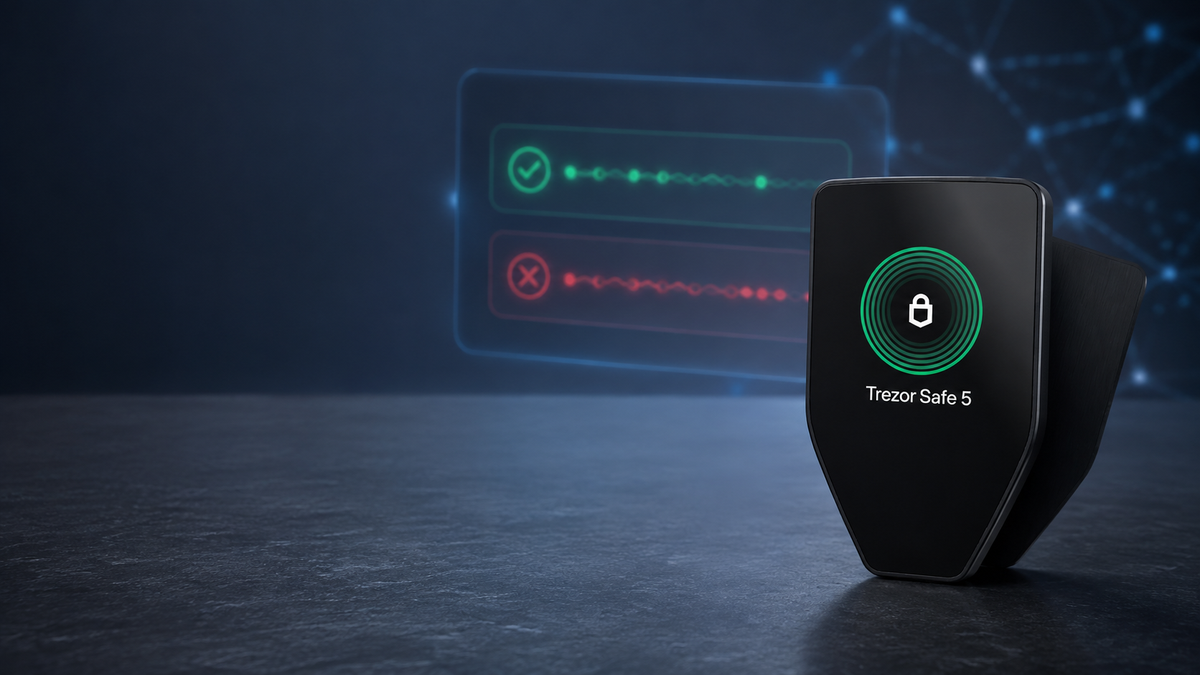
Address poisoning is a scam that plants a lookalike wallet address in your transaction history. The attacker hopes you will later copy that address instead of the real recipient. No private key needs to be stolen; one careless copy-and-paste can send an irreversible transfer to the scammer.
Key takeaways
- The fake address is designed to look familiar: its first and last characters may match the real one.
- The scam abuses transaction history: a tiny transfer or zero-value token event places the attacker's address where you expect to see a trusted recipient.
- Your wallet may not be compromised: the danger is selecting the wrong destination.
- Compare the full address: do not rely on the first four and last four characters.
- Use an address book and a test transfer: these two habits prevent most losses.
What is address poisoning?
Public blockchain addresses are long and difficult to recognize. Many wallet interfaces shorten them to a few characters at the beginning and end. Attackers generate an address with a similar visible pattern, then send a negligible transfer or create a token event so it appears in the victim's history.
The victim later opens the history, sees what looks like a familiar address and copies it. Because blockchain transfers are generally irreversible, the mistake can become permanent as soon as the transaction is confirmed.
How the scam works
- The attacker monitors public transactions and identifies addresses that regularly interact.
- They generate a lookalike address with matching visible characters.
- A tiny or zero-value event is sent to place the fake address in the history.
- The victim copies the most recent entry instead of using a verified source.
- The attacker receives the mistakenly transferred assets.
An unexpected token or tiny transfer does not need to be “returned.” Do not interact with it, visit a link in its token name or copy its address.
Why the fake address can look convincing
Wallets often abbreviate addresses, while users tend to check only the edges. Repeated transfers to the same exchange or personal wallet also create familiarity and reduce attention. Attackers exploit this routine rather than breaking cryptography.
How to prevent address poisoning
- Use a saved address book with clear labels for regular recipients.
- Obtain a fresh deposit address from the destination, not from transaction history.
- Compare the entire address, preferably in grouped sections.
- Verify the network as well as the address.
- Review the destination on the hardware-wallet screen.
- Send a small test amount and confirm arrival before the full transfer.
- For business payments, verify important addresses through a second communication channel.
What to do if you already sent funds
Do not send another transaction. Record the transaction ID, destination, time and screenshots, then contact the sending platform and SIAMBC for guidance. A confirmed on-chain transfer usually cannot be reversed, but rapid reporting can help if the receiving address is linked to a centralized service. Never pay someone who promises guaranteed recovery.
How a hardware wallet helps—and what it cannot do
A hardware wallet provides an independent screen showing the address the device is actually being asked to sign. This protects against some clipboard malware and display manipulation, but it cannot know whether you intentionally selected the wrong lookalike address. The owner must still compare the destination carefully.
Frequently asked questions
Does a poisoned history mean my wallet was hacked?
Usually no. Public addresses and transaction histories are visible. The scammer can create an entry without accessing your private key.
Can I hide or delete the fake transaction?
Blockchain history cannot be deleted. Some wallet apps allow spam tokens to be hidden.
Is checking the last four characters enough?
No. Lookalike addresses are created specifically to match visible prefixes and suffixes.
Should I send the unknown token back?
No. Ignore or hide it and avoid links associated with it.



Share:
Where Should You Buy a Hardware Wallet? Seven Checks Before Setup
Ledger or Trezor: Which Hardware Wallet Brand Fits Your Workflow?