

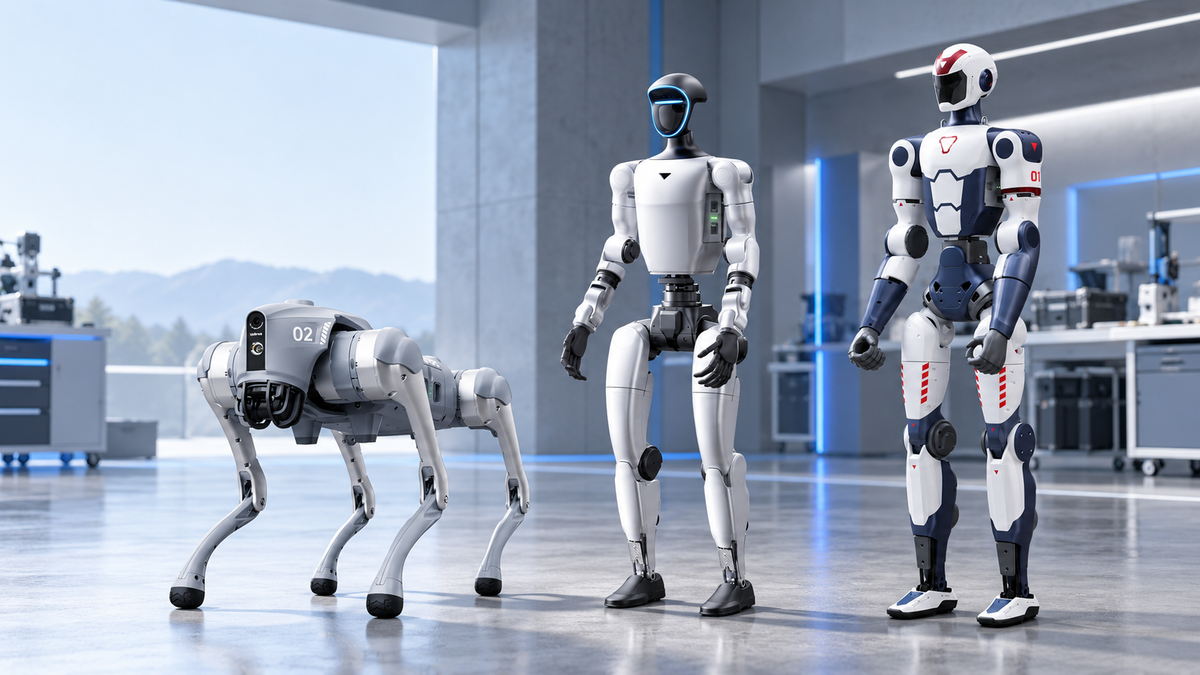
Unitree is a robotics company best known for high-performance quadruped and humanoid robots. Its products range from compact four-legged platforms for education and development to humanoid systems and industrial robots designed for research, inspection and embodied-AI projects.
Videos of Unitree robots running, dancing or recovering from a fall often attract attention online. Those demonstrations are impressive, but they show only one part of the picture. The more useful question is what the hardware can do in a real project, what software access is available and which model is appropriate for the environment.
What kind of company is Unitree?
Unitree Robotics is based in Hangzhou, China. The company develops and manufactures legged robots, humanoid robots, robotic arms, perception hardware and core components such as motors, controllers and LiDAR systems.
Unitree is one of the companies that helped move dynamic quadruped robots beyond research laboratories and into products that universities, developers and businesses can purchase. Its range now covers consumer and education models as well as larger systems intended for professional and industrial work.
What does Unitree make?
Quadruped robots
Quadruped robots use four articulated legs instead of wheels. This can help them move across stairs, slopes and uneven surfaces where a conventional mobile robot may struggle.
- Unitree Go2 is a compact platform aimed at education, development, demonstrations and mobile data collection. Different versions provide different levels of computing, connectivity and software access.
- Unitree B2 is a much larger industrial platform intended for demanding inspection, surveying and field applications.
A quadruped is not simply a remote-controlled “robot dog.” Its practical value comes from the combination of locomotion, sensors, communications, payload support and software that allows it to collect data or carry equipment through a site.
Humanoid robots
Humanoid robots are built around a body layout closer to a person, typically with two legs, a torso and two arms. That shape is useful for research into whole-body motion, manipulation and tasks designed around human spaces.
- Unitree R1 is a compact humanoid platform. Its smaller footprint makes it easier to consider for laboratories, classrooms and development projects where a full-size robot would be impractical.
- Unitree G1 offers a larger development platform with 3D perception and an EDU version that supports additional computing and secondary development.
- Unitree H1 and H2 sit higher in the range as full-size humanoid systems for advanced research and professional applications.
Humanoid hardware does not automatically mean human-level intelligence. What the robot can perceive, decide and perform depends on its model, sensors, computing hardware, software, training and the task configured by the operator.
Where are Unitree robots used?
Education and research
Universities and robotics teams can use open development models to study locomotion, perception, control, reinforcement learning and human-robot interaction. For this work, software access and compatibility with additional computing are often more important than headline speed.
Inspection and surveying
A legged platform can carry cameras, LiDAR or other sensors through areas with stairs or uneven ground. Potential applications include facility inspection, mapping, construction surveys and collecting data in locations that are inconvenient or risky for people.
Embodied AI development
Embodied AI connects perception and decision-making with a machine that can act in the physical world. A Unitree platform can provide the body, motors and sensor interfaces, while developers build the software layer for navigation, interaction or manipulation.
Demonstration and public engagement
Robots are also used at exhibitions, universities and corporate events. Movement is visually engaging, but reliable deployment still requires preparation, a controlled operating area and trained staff.
How is Unitree different from a conventional industrial robot?
A traditional industrial robot arm is usually fixed in one location and repeats a defined task inside a controlled work cell. A Unitree quadruped or humanoid is mobile and designed to operate through a larger environment.
That mobility creates new possibilities, but it also adds complexity. Battery life, terrain, wireless communication, sensor coverage, safety boundaries and recovery procedures all need to be planned.
Which Unitree model should you consider?
- Choose Go2 when you need a compact quadruped for education, development, demonstrations or movement across uneven ground.
- Choose R1 when you need a compact humanoid platform and want to keep the physical footprint manageable.
- Choose G1 EDU when your project needs a more capable humanoid development platform, additional computing and broader software access.
- Consider B2 or another industrial model for heavier payloads, longer field operation or demanding inspection environments.
Versions within the same product family can differ significantly. Confirm development access, included computing, sensors, controller, battery, payload and warranty before comparing quotations.
What should a business check before buying?
- Define the job first. Describe the terrain, operating hours, payload, sensors and expected level of autonomy.
- Check software access. A standard model may not provide the same secondary-development options as an EDU version.
- Plan safety and training. Establish an operating zone, emergency procedures and responsibility for supervision.
- Confirm delivery and support. Large robotics projects may involve configuration, import scheduling, spare batteries, accessories and manufacturer warranty coordination.
- Budget for the complete system. The robot body may be only one part of the project. Computing modules, sensors, development work and on-site integration can affect the total cost.
Frequently asked questions
Is a Unitree quadruped an autonomous robot?
It can include assisted movement, obstacle sensing and other intelligent functions, but the level of autonomy depends on the exact model and software. Do not assume every version can navigate or perform a business task without development work.
Can Unitree robots be programmed?
Development access varies by model. EDU versions are generally intended for research and secondary development, while entry-level versions may provide limited or no low-level access. Check the specification for the exact configuration.
Are Unitree robots ready to replace employees?
Not as a general assumption. They are platforms for defined tasks. Successful use requires a clear workflow, suitable hardware, software integration, supervision and realistic expectations about reliability and safety.
Where can customers in Thailand enquire?
SIAMBC lists selected Unitree models for education, research and business projects in Thailand. Contact the team with your intended application, operating environment and required sensors so an appropriate configuration and quotation can be prepared.
Summary
Unitree has helped make dynamic legged and humanoid robots more accessible outside specialist laboratories. Its products are best understood as configurable robotics platforms rather than finished machines that can perform every task immediately.
The right choice starts with the work: where the robot will move, what it must carry or sense, how much development is required and who will operate it. Once those requirements are clear, the differences between Go2, R1, G1 and the industrial range become much easier to evaluate.
Share:
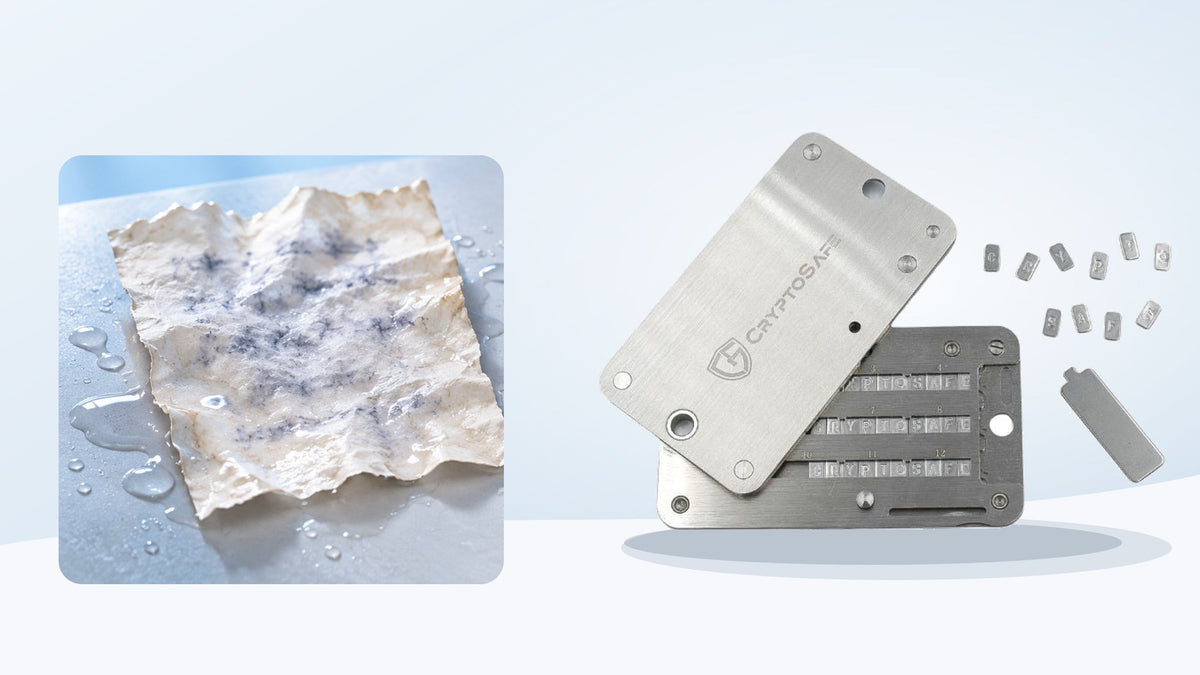
Water-Damaged Seed Phrase? What to Do Before You Reset Anything