

Answer first
- Open source is valuable, but it is not a security certificate. Public code can be reviewed, yet implementation, key generation, hardware and user behaviour still matter.
- Closed components are not automatically unsafe. Secure Elements often include protected technology that is assessed through certification and independent testing.
- Compare the whole system: firmware verification, trusted display, backup design, signing flow, audits and the manufacturer's response to vulnerabilities.
“Is it open source?” is a useful question when comparing hardware wallets, but it cannot answer “Is it safe?” on its own. Hardware wallets combine firmware, chips, screens, mobile or desktop software, manufacturing controls and a backup process. Every layer changes the trust model.
What open source actually provides
Public source code allows researchers and independent developers to inspect how software works, reproduce builds where supported and identify flaws without relying only on a manufacturer's description. It improves transparency and can make hidden behaviour harder to maintain.
That benefit has limits. Public code is not automatically well reviewed, and the code online must correspond to what runs on the device. A design can also fail through hardware, supply-chain issues, poor random-number generation or unsafe user workflows even when its firmware is public.
Why Secure Elements are often partly closed
Secure Elements are designed to resist physical extraction and fault attacks. Their low-level designs and libraries can be subject to vendor restrictions. Manufacturers therefore use evidence such as Common Criteria certification, laboratory testing, device attestation and external audits to support trust where full public inspection is not available.
An EAL rating applies to a defined component and evaluation scope. It should not be read as a score for the entire wallet, app and backup process.
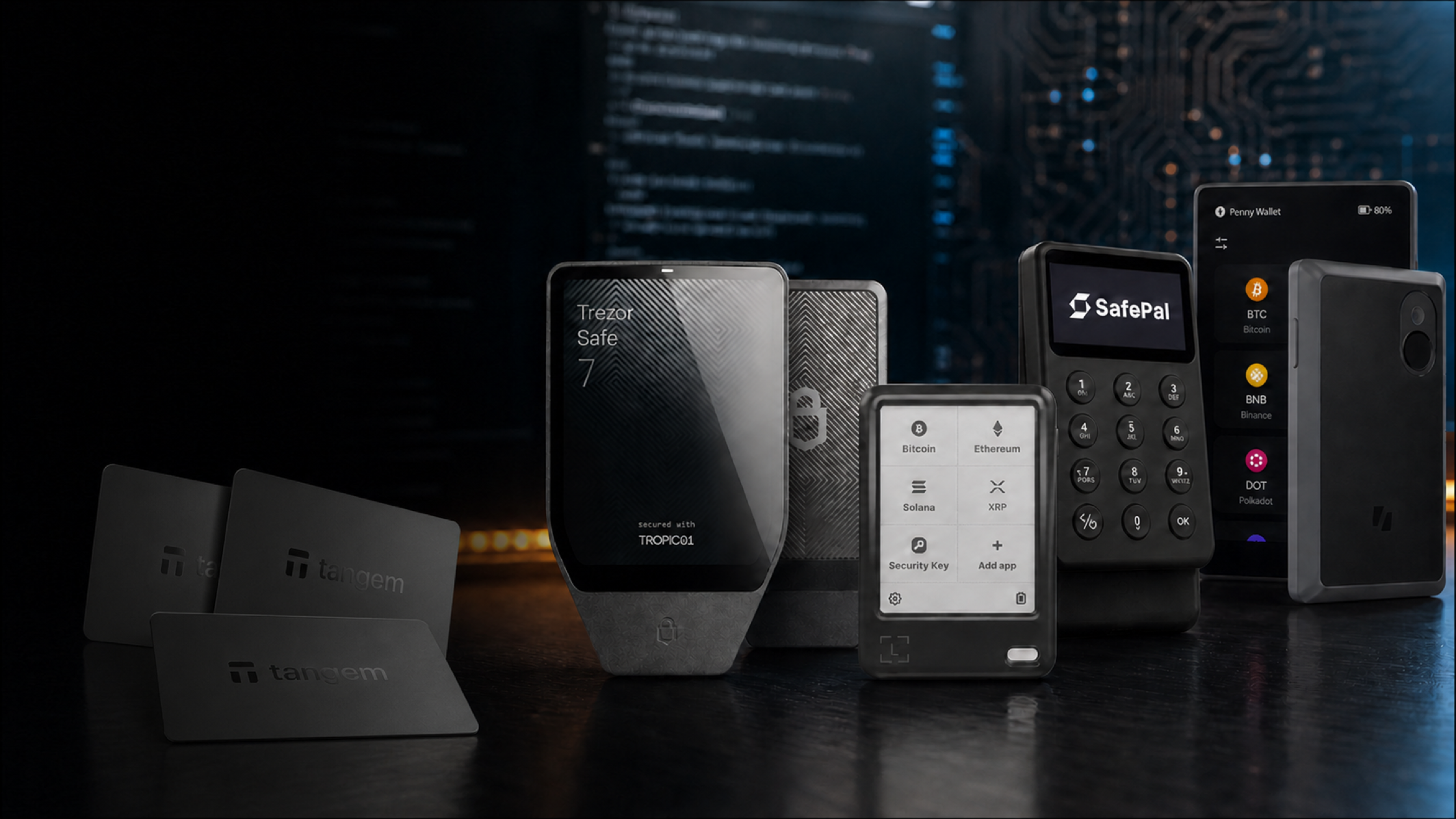
How six brands approach transparency
| Brand | General approach | What to examine |
|---|---|---|
| Trezor | Strong open-source focus across firmware and related designs | Secure Element architecture, reproducible software and published disclosures |
| Ledger | Many software components are public; some Secure Element layers remain restricted | Secure-screen design, device verification, audits and signing clarity |
| SafePal | Transparency varies by model and component | Check the exact model, connection method and published repositories |
| Keystone | Open-source firmware focus with QR air-gap designs | Firmware verification, QR data flow and Secure Element implementation |
| Tangem | Mobile app source is public; immutable card firmware uses certification and audits | Card backup model, no-seed option and reliance on the Secure Element |
| D'CENT | Secure Element and on-device biometric design | Firmware verification, biometric threat model and published assessments |
This table is not a ranking. Each design reduces different risks and asks the user to trust different evidence.
What matters more than a label
- Key generation: how the device creates randomness and keeps keys isolated.
- Trusted display: whether the screen shows the real destination and action before approval.
- Firmware verification: how the device rejects unauthorised software.
- Backup: whether you can recover safely without creating an easy point of theft.
- Audits and disclosure: whether independent reviews exist and how the manufacturer handles discovered flaws.
- Usability: whether the owner can follow the process correctly every time.
Choosing by threat model
Users who want maximum public inspectability may favour Trezor or Keystone. Those who prioritise a Secure Element ecosystem and polished software may consider Ledger. SafePal offers different connectivity choices at accessible prices. Tangem reduces device complexity with card-based backups and an optional seedless setup. D'CENT adds fingerprint confirmation on the device.
Compare individual products rather than treating every model from a brand as identical. See the hardware wallet comparison and current store range.
Frequently asked questions
Is open source always safer than closed source?
No. It improves transparency, but safety also depends on implementation, review quality, hardware, backups and user behaviour.
Does a higher EAL number mean the whole wallet is safer?
No. The rating applies to a specified component and scope, not every part of the wallet system.
Can an open-source wallet still be hacked?
Yes. Public review can help find weaknesses, but it cannot eliminate physical attacks, software bugs, phishing or unsafe backups.
What is the most important rule?
Never reveal a recovery phrase, private key or passphrase, and never approve an action you cannot verify on the device screen.
Conclusion
Open source improves transparency, but it is not a guarantee of security. Compare how Trezor, Ledger, SafePal, Keystone, Tangem and D'CENT build trust.

Share:
Binance Blockchain Week Bangkok 2026: Dates, Venue and Key Themes
Trader Who Made $49 Million Shorting Crypto Lost $24 Million on Ether in 12 Seconds