

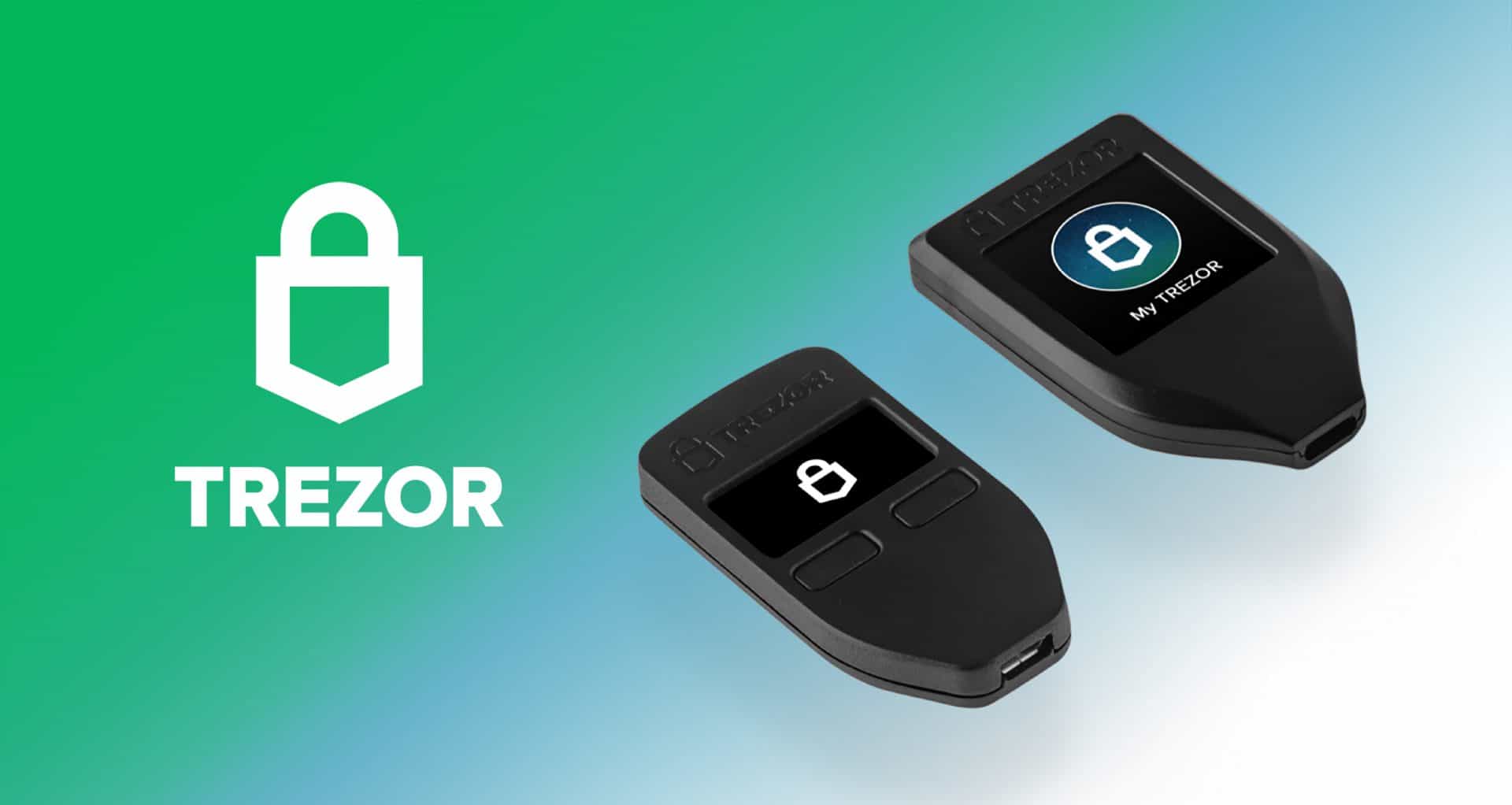
Today the SIAMBC team is reviewing the Trezor wallet, a wallet for storing crypto that keeps assets safe and can hold over 1,694 currencies, covering all the main networks. A device anyone serious needs to have.
Digital money, or crypto for short, counts as an extremely valuable asset today. Prices climbing by the day have attracted more and more theft exploiting holes in the online world. For the most part, attackers rely on a victim accidentally approving a smart contract on a DeFi platform that gives a third party the right to reach into the online wallet — the hot wallet — used for transacting; or even on hacking into a computer connected to a crypto hot wallet and pulling the money out of it without the owner realising.
A device to protect against being hacked is therefore essential for anyone holding crypto. The device used most widely is the hardware wallet, of which there are a great many kinds to choose from. We would like to introduce one of the most popular hardware wallets on the market: the Trezor wallet.
Getting to know the Trezor wallet
Trezor is one of the manufacturers and providers of hardware wallets most popular among people who use blockchains for their transactions, and among those holding cryptocurrency, because it is highly secure, designed to be easy to use, and open source — so it can be trusted. Trezor can store more than 1,694 currencies, including Bitcoin, Ethereum, Binance Coin, Litecoin and many others, covering the main networks in the blockchain world.
The advantages of storing crypto assets on a Trezor
A hardware wallet increases the security of storing your crypto, acting like a safe that protects the user's assets. It gives the private key — the code for recovering the hardware wallet — to the user to write down on paper, or store offline somewhere private, where nobody can steal it over the internet. That is unlike a hot wallet or online wallet, where a third party has to hold the private key, or the code that opens the wallet, on the owner's behalf. That code is embedded in the computer, which means it can be reached online — a hole through which hackers can steal the money in a hot wallet.
Trezor combines security, privacy and ease of use, with no third party involved, and requires a PIN code to be entered on the hardware wallet itself every time a transaction is carried out, as an additional layer of security. Beyond security, another of Trezor's strengths is its emphasis on privacy — for instance, Trezor can connect to the Tor browser used for browsing the dark web through the application on the hardware wallet, in a single click.
The limits of using a Trezor
Generally, a hardware wallet has some small limitations in use. It cannot be used perfectly with an online crypto wallet installed on a smartphone, even though Trezor states that this is now supported — many functions still have to be used through a hot wallet in a browser, or through the Trezor Suite program on a computer. MetaMask cannot currently be used through a phone either, which means that if a user wants to buy or sell crypto away from home, they have to carry both a computer and the hardware wallet. On top of that, being a device that works offline, there may be some issues around capacity.
Trezor as a FIDO U2F token for extra security
Trezor does, however, offer users a convenient alternative to make up for those limits. Beyond offline crypto storage, the hardware wallet can be used as a FIDO U2F token to log in to various web services, and to encrypt and decrypt entries stored in the Trezor Password Manager function. It can also be used to access third-party applications and services securely. The Trezor One can be used to protect accounts on a wide range of platforms — Gmail, Google Drive, Dashlane, Dropbox, WordPress, GitLab, GitHub, Facebook, Binance, Bitkub, Twitter and many more.
A hardware wallet counts as a necessary piece of security equipment for anyone holding crypto and transacting on DeFi platforms and MetaMask — decentralised finance — because in a DeFi system the user handles the storage and the transactions entirely themselves, 100%, with no intermediary to help or to put things right if a transaction goes wrong. Trezor is therefore a genuinely interesting option.
Share:
How to fix a Trezor stuck on the bootloader screen
Four NFT game tokens worth watching in 2021