



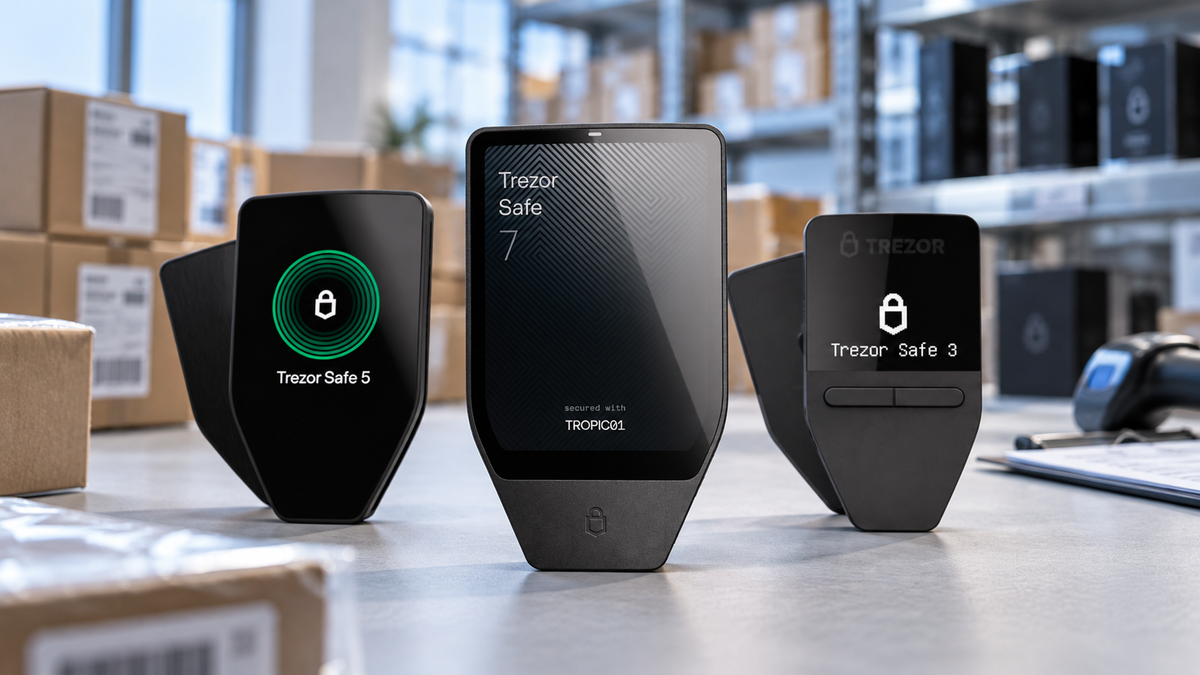
Trezor is reducing the number of authorized resellers it works with after recent supply-chain incidents drew renewed attention to how hardware wallets are stored and handled before reaching customers. The company says the decision is preventive and stresses that it has found no evidence that Trezor devices in its authorized network were compromised.
Key points
- Trezor says it will reduce its reseller network so it can monitor the remaining partners more closely.
- The company describes the move as a precaution, not a response to a confirmed compromise of Trezor devices.
- Affected reseller authorizations are expected to end on 1 January 2027, according to the partner notice reported by Decrypt.
- Trezor has not disclosed how many resellers are affected or published a complete list of the departing partners.
- Buyers should check the authorized seller list at the time of purchase and complete every first-use authenticity check before transferring funds.
What Trezor announced
On 13 October 2026, Trezor said it had decided to reduce the number of resellers in its network following recent supply-chain incidents. Its stated goal is to make oversight of the remaining partners more effective.
The company also drew a firm line between precaution and a confirmed incident involving its own products. Trezor said there was no evidence that Trezor devices had been compromised and described the change as a preventive step taken out of caution.
Why the company is acting now
The announcement came shortly after Ledger confirmed that genuine Ledger devices sold through CryptoBilis had been physically altered after leaving Ledger's control. That investigation concerned Ledger devices and a separate distribution route. It is not evidence that Trezor devices were compromised.
Trezor's response focuses on reducing the number of organizations it must supervise. Fewer partners can make sourcing, storage and handling controls easier to audit, but the strength of the measure will depend on how consistently those rules are enforced across the remaining network.
The distinction matters
The CryptoBilis investigation is a confirmed case involving modified Ledger devices. Trezor's reseller reduction is a preventive policy change. These are related by the broader issue of supply-chain security, but they are not the same incident.
What changes for affected resellers
According to a partner notice shared by Trezor Chief Commercial Officer Danny Sanders and reported by Decrypt, affected reseller authorizations will end on 1 January 2027. Those partners will not receive new inventory, while existing stock may continue to be sold before the authorization expires.
Trezor has not publicly disclosed how many partners received the notice. It also said the decision did not reflect the effort or conduct of every affected reseller, and that the network may be reviewed again if circumstances change.
| Point | Current position |
|---|---|
| Reason for the change | Trezor says it wants closer oversight after recent supply-chain incidents. |
| Evidence of compromised Trezor devices | Trezor says it has found none in connection with this announcement. |
| Authorization end date | 1 January 2027 for affected partners, according to the reported partner notice. |
| Number of affected resellers | Not publicly disclosed. |
| Full list of departing partners | Not publicly disclosed at the time of publication. |
| Rules for remaining partners | Trezor says sourcing, storage and handling controls will be tightened. |
What this does and does not mean
It does mean supply-chain controls are becoming a larger part of wallet security
A hardware wallet can be technically secure and still face risk if a genuine unit is opened, altered or substituted while moving through storage and retail channels. Manufacturer checks, reseller controls and the customer's first-use inspection all matter.
It does not mean every reseller or every Trezor device is unsafe
Trezor has not made that claim. The company has not announced a recall and has not identified a compromised Trezor device connected to this policy change. The reduction affects selected commercial relationships, and Trezor has not published enough information to infer the status of every individual seller.
Past counterfeit cases are separate
Trezor previously warned about counterfeit Model T devices sold through an unauthorized Russian marketplace. Those reports involved fake or modified products outside an authorized channel. They provide useful historical context, but they should not be presented as evidence about the current reseller review.
Do not open a device to inspect the electronics yourself. Opening a wallet can damage it, destroy tamper evidence and create additional safety risks on battery-powered models. If anything looks unusual, stop and contact Trezor through its official support channel.
What buyers should check before using a Trezor
- Check the seller at the time of purchase. Use Trezor's current authorized reseller page, because partner status can change.
- Keep the receipt and order details. These records help establish where and when the device entered your possession.
- Inspect the box and device. Look for broken seals, mismatched accessories, marks around seams or ports, or packaging that differs from official product images.
- Download Trezor Suite only from Trezor's official website. Do not use software supplied by a seller or a link printed on an unfamiliar card.
- Complete the authenticity checks shown in Trezor Suite. Safe-family devices also use a Secure Element for device authentication during setup.
- Create the wallet backup yourself on the device. A new unit must never arrive with a PIN or recovery words already prepared.
- Never type the wallet backup into a website, computer or support form. No legitimate support agent needs those words.
- Send a small test amount first. Verify the full receiving address on the device screen before moving a larger balance.
Frequently asked questions
Has Trezor confirmed that its devices were compromised?
No. In the announcement, Trezor explicitly said it had found no evidence that Trezor devices were compromised.
Is Trezor ending every reseller relationship?
No. It is reducing the number of resellers. The company has not published the number of partners that will remain or a complete list of those leaving.
Should customers stop using a Trezor they already own?
Trezor has not issued a general instruction to stop using its devices. Customers who notice unusual packaging, an unexpected setup process, a preconfigured PIN, supplied recovery words or an authenticity warning should stop and contact official support before transferring funds.
Is buying directly from the manufacturer the only safe option?
Direct purchase shortens the commercial chain, but authorized resellers remain important in countries where direct shipping or local support is limited. The practical standard is a verifiable seller, controlled custody, intact packaging and a clean first-time setup.
Can the authorized reseller list change?
Yes. This announcement is itself evidence that authorization can change. Check the latest list when you buy rather than relying on an old screenshot or a seller's historic claim.
Conclusion
Trezor's decision is best understood as a preventive tightening of its distribution network, not confirmation of a breach involving Trezor devices. The announcement also reinforces a broader lesson: hardware-wallet security begins before the device is powered on. Buyers should verify the seller, inspect the product, use official software and generate their own wallet backup from a clean setup.
Sources
- Trezor: reseller network statement on X
- Decrypt: Trezor cuts its reseller network after supply-chain incidents
- Trezor: firmware authenticity checks
- Bitkub Blog: Thai coverage of the announcement
Written by Bank · Published 16 October 2026. This article reflects publicly available information at the time of publication. Details may change if Trezor releases an updated reseller list or further findings.
Share:
CryptoBilis Update: Ledger Confirms a Localized Distribution Attack