
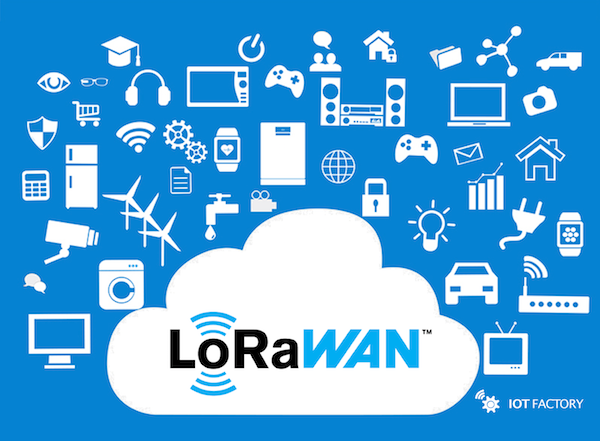
LoRa, or LoRaWAN, is a wireless communications network that sends data at low power, and a network system able to transmit over long distances — Long Range, hence LoRa — built to serve the M2M and IoT markets. LoRaWAN counts as a model low-power data connection system for long-distance communication, using a radio signal designed to work at very low levels in order to achieve low-power transmission over the required distance.
LoRaWAN's signal modulation and radio interface are designed and tuned to achieve the form of communication most wanted for use in the IoT and M2M markets.
At present LoRaWAN is used together with microcontroller boards such as Arduino, so that a great many developers can put it to use.
The LoRa Alliance
With so many systems on the market, the industry developed and promoted the use of LoRa's wireless system through a body called the LoRa Alliance, launched at Mobile World Congress in March 2015, with the aim of operating to an international standard and having a system able to connect to the IoT market under the name LPWAN.
Because LoRa was developed on the basis of Semtech's system, the standard can be applied across a wide range of companies. That has increased the degree of interrelation and connection through a variety of connection formats, as well as increasing adoption and acceptance.
The founding members of the LoRa Alliance include Actility, Cisco, Eolane, IBM, Kerlink, IMST, MultiTech, Sagemcom, Semtech and Microchip Technology, along with leading telecommunications providers such as Bouygues Telecom, KPN, SingTel, Proximus, Swisscom and FastNet (part of Telkom South Africa).
Why LoRaWAN technology matters
The important elements of LoRa technology are as follows:
- Long-range communication of 15 to 20 km
- Millions of receiving channels
- Long battery life: over 10 years
The components of LoRa technology that can be used and connected into the system are:
- LoRa PHY / RF interface. The physical layer of LoRa, or PHY, is the important part of how the system works, governing the direction of RF transmission — signals sent back and forth between a receiving channel and a destination, such as between a sensor and a LoRa receiver. The physical layer, or radio interface, governs the various signal properties, whether frequency, modulation format, transmission power level, or transmitting and relaying signals between the receiving device and other devices.
- The LoRa protocol stack software. Beyond LoRa's physical layer, the LoRa Alliance has also specified the use of an open protocol stack. Opening that software helps improve LoRa's efficiency, because the various companies involved in developing and using LoRa can work together — which makes it convenient to use and keeps the cost of connecting to IoT devices low.
- The LoRa network architecture (LoRaWAN). Beyond the RF components of the LoRa wireless system, there are other network architecture components, such as the structure of the whole system, terrestrial communication channels, servers and all the computer applications. The overall network architecture is what is called LoRaWAN.
Example applications
LoRa's wireless network technology can be put to use through a wide variety of application formats.
Low-power transmission over long distances means signals can reach destinations in a wide range of locations, and both indoors and outdoors it delivers effective communication.
Share:
What is IoT? A rough guide to the Internet of Things
What is blockchain technology? Explained with an Amazon purchase