

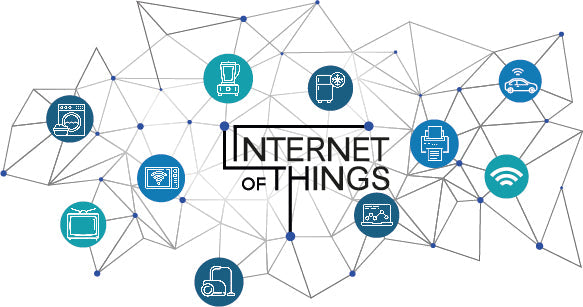
How are you reading this post? You may be reading it on a computer screen, a mobile phone, or a tablet screen. But whichever device you are using, most of them are connected to the internet.
Connecting to the internet is a remarkable thing, given the many benefits we get from it that none of us thought possible before. If you are old enough, cast your mind back to the mobile phone you used before they became smartphones. Of course you could call and send messages on a mobile phone in that earlier era, but now you can read books, watch films or even listen to music on the device you are holding — and that is only part of what a smartphone can do.
The Internet of Things (IoT) is a fairly straightforward idea: it means bringing everything in the world together and connecting it to the internet.
I think the confusion around IoT does not come from the concept being narrow and hard to interpret broadly, but from its being too broad — interpreted well beyond the bounds of the concept. So it can be hard to understand IoT, because there are so many examples and opportunities that can be pursued through it. To understand it more clearly, it is very important to understand the benefit of connecting things to the internet, and the reason we would connect everything to it.
Why IoT matters in future
Once a device is connected to the internet, it can send data, or receive data, or possibly both. That ability to send and receive data is what makes a device intelligent, which is a good thing.
Compare it with the smartphone we are holding now. You can listen to every song in the world, but that does not mean your phone contains every song in the world. Those songs are stored elsewhere; your phone's job is only to send data (to request the song) and receive data (to play the song through the phone).
Because the devices we use in daily life are intelligent, our devices do not need large storage or a high-performance computer to store things. All we have to do is connect our device to storage or a high-performance computer over the internet.
IoT means connecting everything to the internet, which can be divided into three main forms:
- Things that collect and store data and send it out
- Things that receive data and act on it
- Things that do both — collect and store data, and act on it themselves
These three forms can create enormous benefit for one another.
Collecting and passing on data
This means sensor devices, which might be temperature sensors, motion sensors, air quality sensors, light sensors and a great many others. Once those sensors are connected to the internet, we can collect environmental data automatically and quickly, which lets us make decisions more nimbly.
In Agriculture 4.0, soil moisture data received automatically indicates to a farmer when their crop needs watering, instead of wasting water by watering heavily (which raises irrigation costs excessively and wastes natural resources) or watering too little (which can lose a great deal of produce and income). Applying IoT technology and these measuring sensors lets a farmer be confident their crop is getting the right amount of water, which increases the farmer's income.

Share:
BX.in.th is closing — what to do now
What is LoRaWAN, and how does it relate to IoT?