

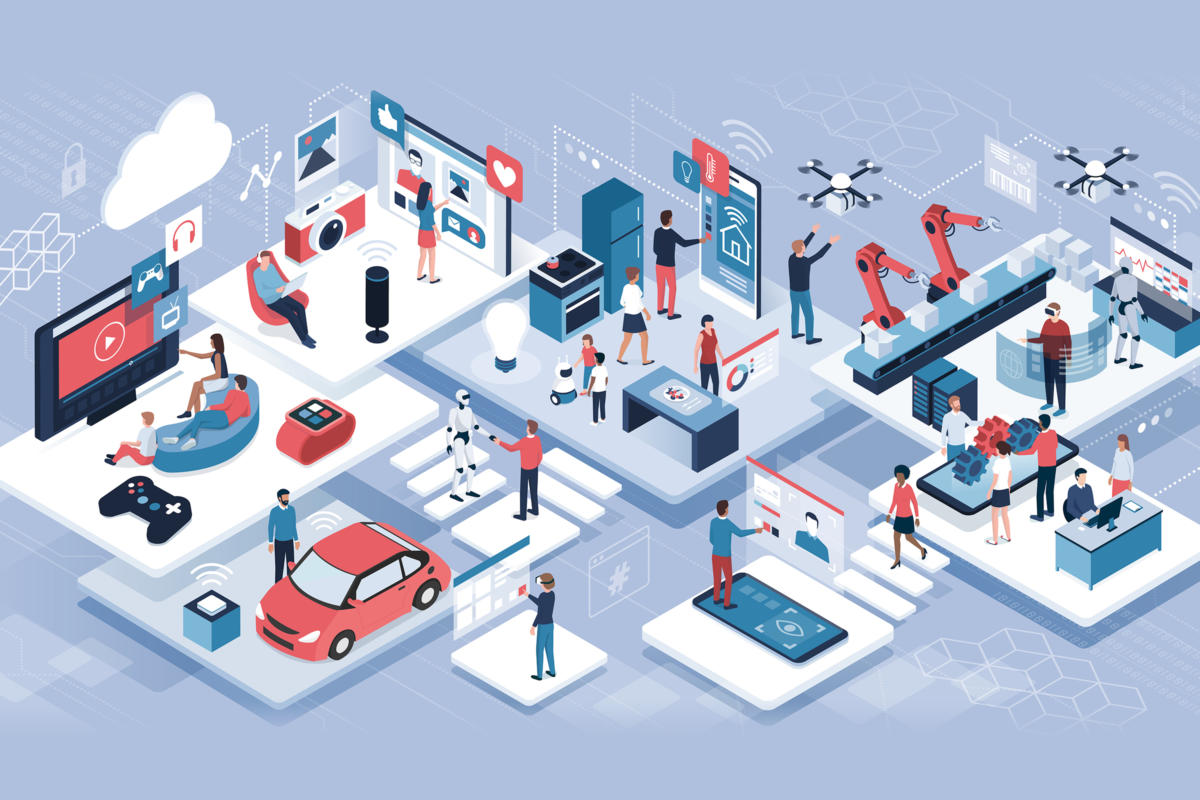
The Internet of Things (IoT) is becoming a topic of conversation more and more, both in the workplace and elsewhere. It is a concept with the potential to affect not only how we live but how we work. But what exactly is IoT, and what effect does it have on you? IoT has a great deal of complexity to it, but here I will cover only the basics. There are technical and policy conversations going on, and yet a great many people are still trying simply to understand the fundamentals. So let us start by understanding a few things. Broadband internet is becoming more and more widespread, connection costs are falling, devices built to use Wi-Fi and various sensors are multiplying, technology costs are dropping, and the smartphone market is climbing rapidly. All of that is creating a perfect storm for IoT.
So what is IoT?
Put simply, it is the idea of connecting any device with an on and off switch to the internet — and connecting devices to one another. That includes everything from mobile phones, coffee machines, washing machines, headphones, light bulbs and wearables to anything else you can think of, including the components of machinery such as aircraft jet engines and the drill bits of oil rigs. As said above, if something has an on and off switch, then there is a possibility it will be part of IoT. The analyst firm Gartner states that by 2020 there will be over 26 billion connected devices — an enormous number of connections. (Some companies estimate it could exceed 100 billion.) IoT is a vast network of connected "things", which includes people. The relationships will be people to people, people to things, and things to things.
How will IoT affect you?
The new rule of the future is that whatever can be connected will be connected. But why would you want so many devices able to communicate with one another? There are many examples that hint at the hidden value. Say you are on your way to a meeting: your car can connect to your calendar and know the best route. If the traffic is bad, your car might send a message to the other party to say you will be late. What if your alarm clock wakes you at 6am and then tells the coffee machine to start making your coffee? What if your office equipment knew when supplies were running low and ordered automatically? What if the wearable you use at work could tell when you are most alert and productive, and share that information with the other devices you use at work? More broadly, IoT can be applied to things like transport networks in a smart city, which can help us reduce waste and improve the efficiency of things such as energy use — helping us understand and improve how we work and live.
The reality is that IoT creates endless opportunities and connections, a great many of which we cannot yet think of or fully understand the impact of. But it is not hard to understand why IoT is such a hot topic today, because it opens the door to a great many opportunities and challenges. Security is one big issue being discussed: with billions of connected devices, how do we keep our data safe? Could someone hack into your toaster and reach your entire network? IoT leaves companies worldwide facing security threats. There are also questions of privacy and sharing, which are hot topics today.


Share:
Examples of IoT technology in the age of Agriculture 4.0
BX.in.th is closing — what to do now