


Anyone using a Ledger, Trezor, Bitbox or another hardware wallet that supports BIP32, BIP39 or BIP44 may well wonder what their wallet actually uses to back itself up.
This article is about BIPs.
- What is a BIP?
- How do BIP32, BIP39 and BIP44 differ?
- How do hardware wallets and wallet software actually back up? (If you want the short, simple version with an example, skip straight to this section.)
1. What is a BIP?
Because Bitcoin is an online network that no single person controls, upgrading it requires opinions to be aired and changes to be accepted by a broad group of people.
BIP stands for Bitcoin Improvement Proposal. There are three kinds — standards track BIPs, informational BIPs and process BIPs — and I will not go into that detail here, since it is not directly relevant to what I want to cover.
In short, a BIP is a place to share information about how Bitcoin or the blockchain works; and if the system itself is to be changed, that change has to be voted through.
The numbers you hear so often — BIP32, BIP39, BIP44 — are effectively document numbers.
2. How do BIP32, BIP39 and BIP44 differ?
BIP32 and BIP39 are the ones concerned with generating public and private keys. BIP44 covers how different currencies are stored. That is why you hear these terms constantly if you use a hardware wallet.
In detail:
BIP32 sets out how to generate an account from a random set of words, twelve or more (128 bits and up).
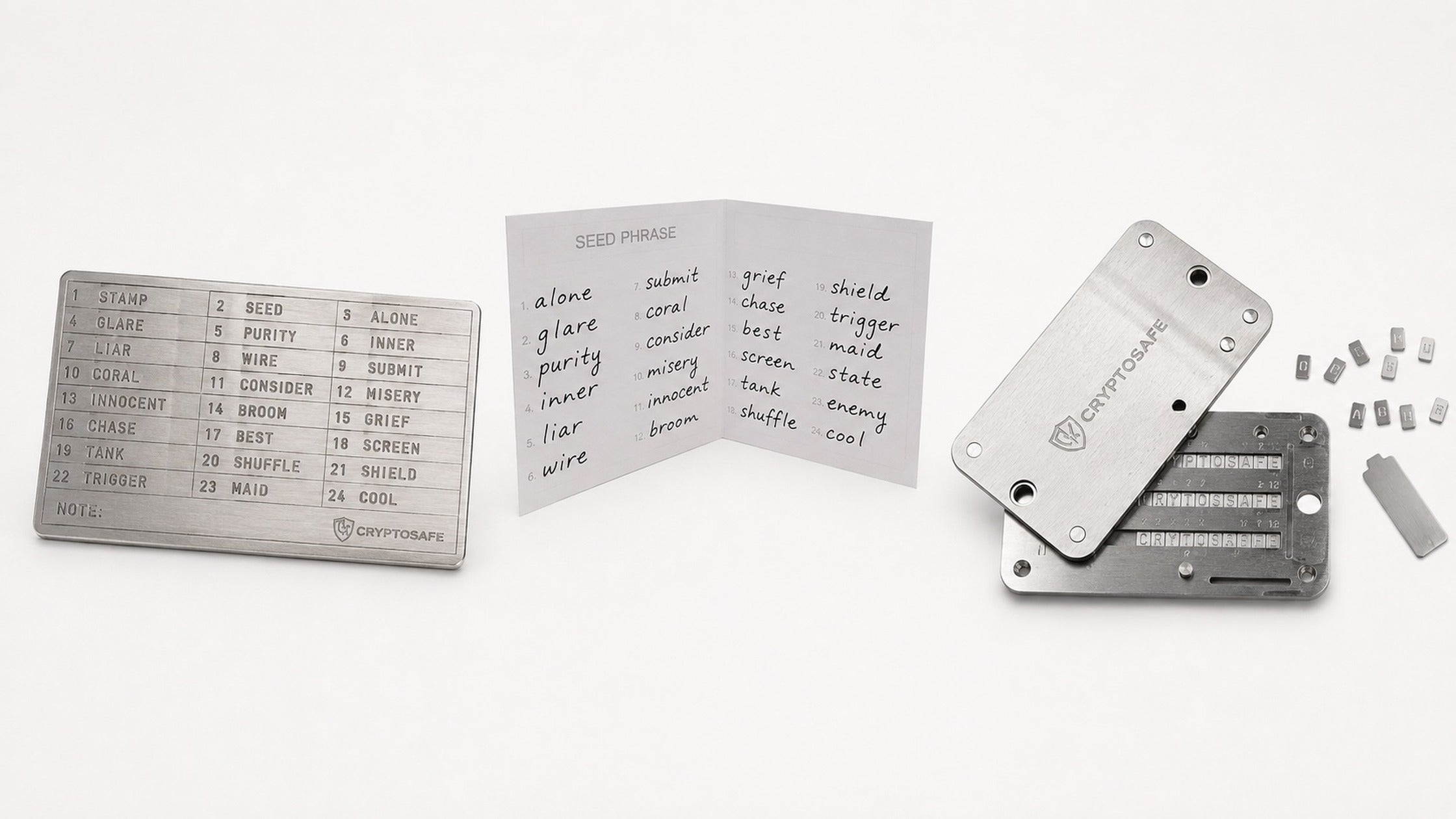
BIP39 is the word list drawn from at random to create the master private key — the 24 words anyone who has used a hardware wallet will know. It is available in a number of languages, though sadly not Thai.
BIP44 sets out how accounts are generated and recorded when you want to hold more than one currency. So if you hear that a wallet supports BIP44, that is a good indication it can hold more than a single digital currency.
There are many other BIPs that have nothing to do with hardware wallets.
3. How do hardware wallets and wallet software back up?
Some people are unclear how these wallets manage to back anything up when you only ever wrote the 24 words down once. Others assume, wrongly, that their wallet data is being stored on the manufacturer's servers. So this section explains how BIP32, BIP39 and BIP44 relate to those 24 English words you wrote down.
I will describe only wallets that support BIP32/39/44.
Step 1: BIP39. The BIP39 English word list contains 2,048 words, and most hardware wallets use 24 of them to create the master private key. The number of possible keys that gives you is 204824 — around 3 × 1079, which is roughly the number of atoms in the observable universe. That is why you need not worry about somebody happening to land on the same 24 words as you, or about anyone brute-forcing them, provided you are not the one showing those words to other people.
Step 2: BIP32. Using the BIP32 method, a master private key is generated from the 24 words you wrote down.
Step 3: BIP44. The wallet then uses the BIP44 method to generate public and private keys from the master private key produced in step 2.
What you can see from this is that your public and private keys are derived from those 24 words by nothing more than computation. That is exactly why you guard the 24 words with your life — they are the key that generates your private key. Knowing the 24 words is knowing your private key.
An example
- The hardware wallet or phone app picks 24 words at random from the 2,048 in BIP39:
bless forget practice behave drill ocean soft wrist glue baby green fiscal feature chair skull snack chat hunt canoe reveal autumn gas sail member - Those 24 words are used to produce a BIP32 seed.
- The BIP32 method turns that into a master private key.
- The BIP44 method generates the public and private keys from it and files them under whichever currency you chose.
That is all it takes for the hardware wallet or the wallet software to create your accounts — with nobody but you knowing what those 24 words are.
So the backup is not held on a server somewhere, or with anybody else on earth. It is held by you.
If you have further questions you can reach us at order@siambc.com.
Share:
What is the Digital Bitbox?
Blockchain and Bitcoin: the technologies that changed finance