

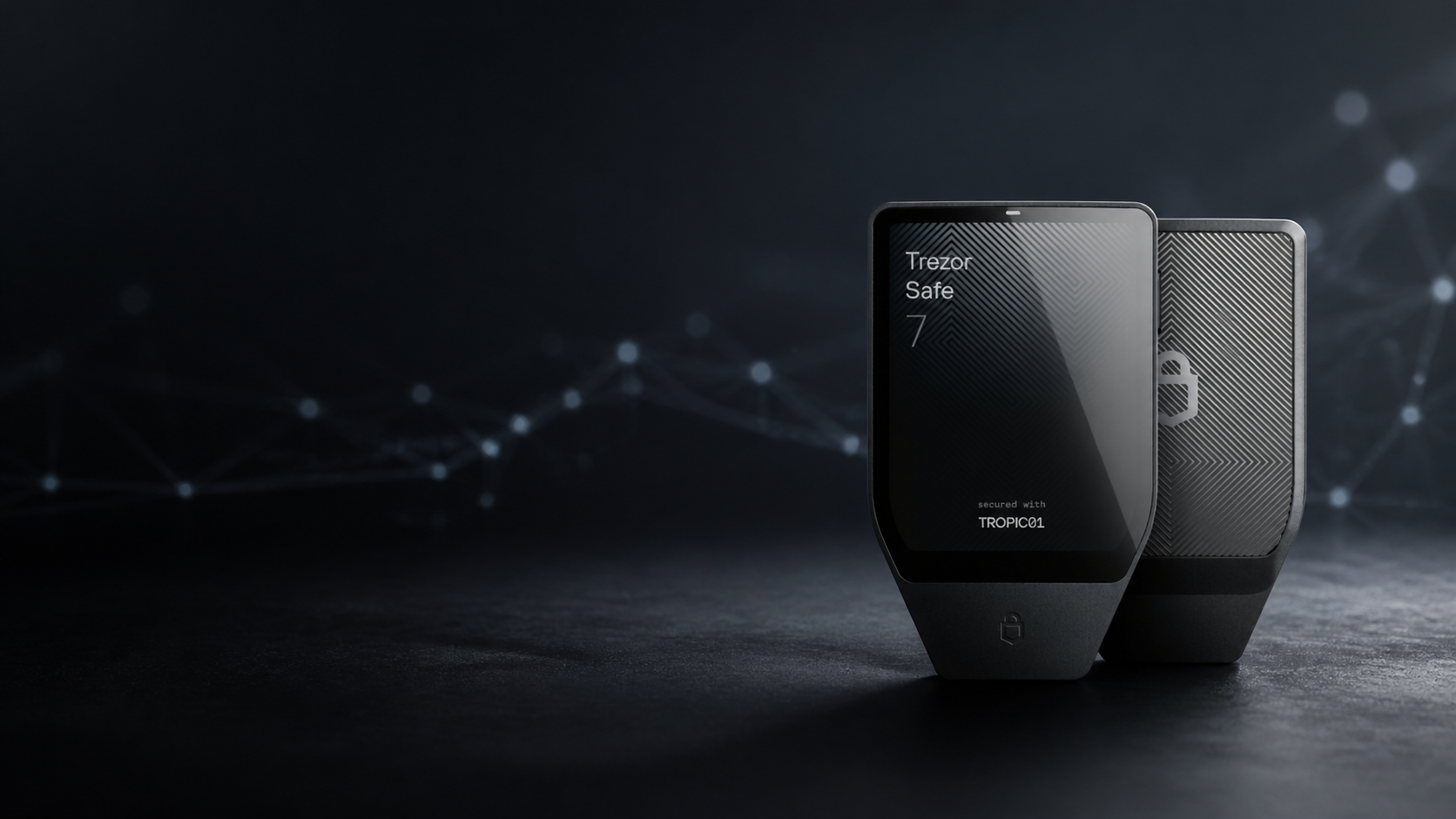
Quantum-ready security does not mean today's quantum computers can steal crypto. It means building hardware and update paths that can adapt if practical quantum attacks emerge. Trezor Safe 7 is positioned for that transition through updateable open-source software and layered hardware protection.
Key takeaways
- Current quantum computers cannot break Bitcoin keys at scale.
- Future risk concerns sufficiently powerful, error-corrected machines.
- Coins whose public keys are exposed may require special attention during a migration.
- Quantum readiness is mainly about upgradeability and ecosystem coordination.
- Trezor Safe 7 combines an open-source platform with layered Secure Elements.
What could quantum computers threaten?
Cryptocurrencies rely on cryptographic systems for signatures and hashing. A sufficiently advanced quantum computer could theoretically weaken some signature schemes. That is different from saying an attacker can do it now. Useful attacks would require capability far beyond current machines.
Quantum-ready is not the same as quantum-proof
No responsible product should promise permanent immunity from an evolving threat. A quantum-ready device should support authenticated updates, flexible cryptographic components and a transparent process for migrating users when standards mature.
How Bitcoin could respond
Bitcoin can adopt new signature schemes through community-reviewed protocol changes. Migration would involve software, wallets, exchanges, miners and users. Addresses that have never spent may reveal less public-key information on-chain than reused addresses, but users should follow future network guidance rather than improvise.
Why Trezor Safe 7 is relevant
Trezor Safe 7 uses an open-source software model that allows public review and future updates, alongside two Secure Elements and the main processor. That does not make Bitcoin post-quantum today. It provides a device architecture intended to accept future security improvements without hiding the implementation from scrutiny.

Trezor
- Open-source, updateable platform
- Layered hardware security
- Large touchscreen and multi-device connectivity
What users should do today
- Keep firmware and wallet software updated through official channels.
- Avoid address reuse where practical.
- Protect the recovery seed from today's far more immediate threats.
- Follow announcements from the Bitcoin ecosystem and wallet manufacturer.
- Do not move funds because of unverified “quantum emergency” messages.
Frequently asked questions
Can a quantum computer steal Bitcoin today?
No publicly known machine can perform that attack at practical scale.
Is Trezor Safe 7 quantum-proof?
It is designed to be updateable and ready for future migration, not to claim permanent immunity.
Should I buy a new wallet only for quantum risk?
Choose based on current security and usability first. Upgradeability is a long-term advantage, not a reason to panic.



Share:
Crypto Phishing: How to Protect Your Seed Phrase and Assets
Thailand's Crypto Travel Rule: What It Means for Wallet Transfers