

Key takeaways
- Six Bitcoin holdings that had been quiet since 2011, 2012 and 2014 moved a combined 553.59 BTC between August 16 and 26, worth roughly $40 million at the time.
- An on-chain transfer proves that coins moved. It does not, by itself, prove that their owner sold them.
- Most of the destinations were not publicly linked to exchanges, so this activity should not be treated as confirmed market selling.
- For long-term holders, the story is a useful reminder to review wallet security and recovery planning.
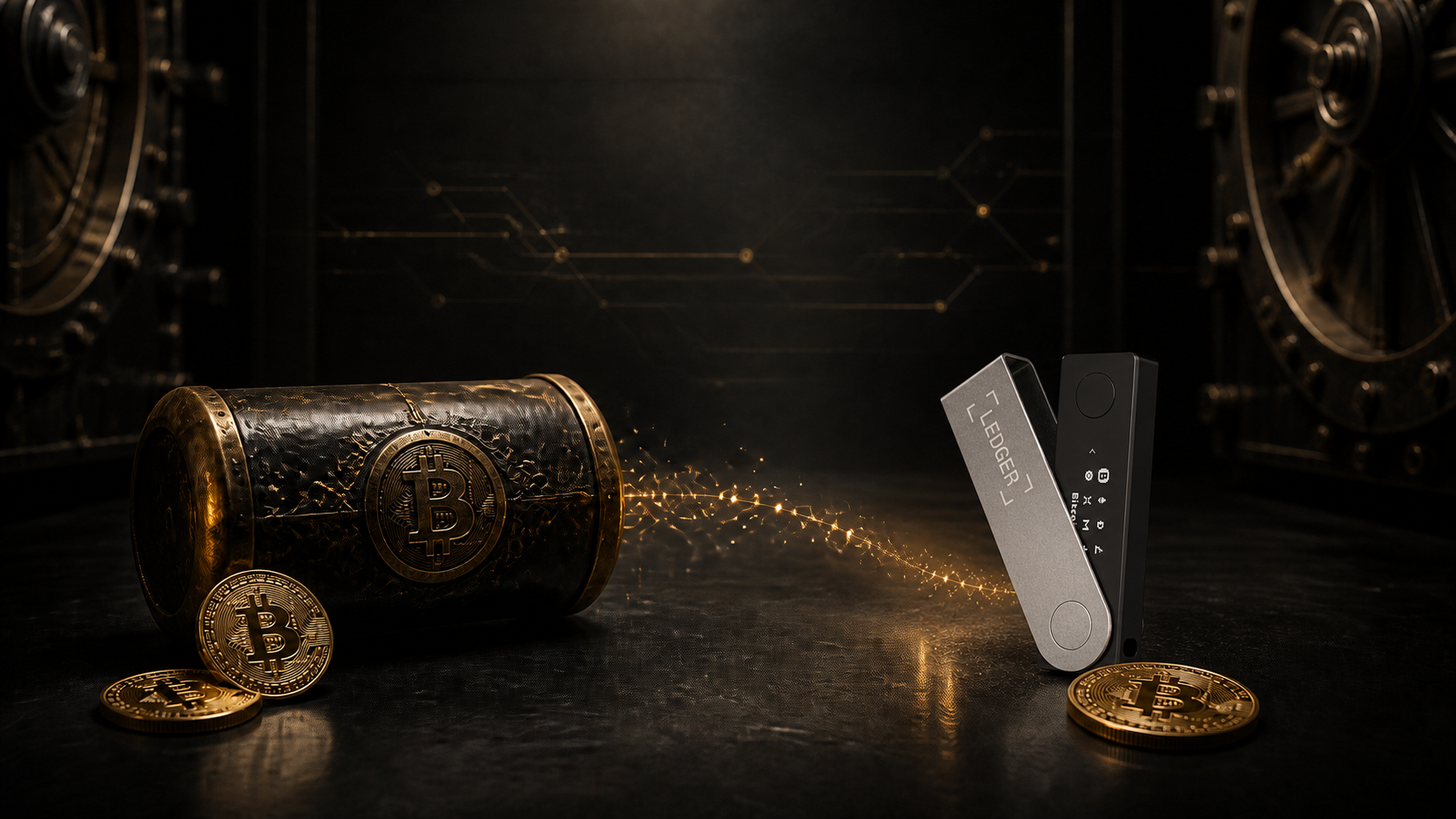
Bitcoin has a long memory. Coins can remain untouched through several market cycles, only to become visible again when their owner makes a single transaction. That is exactly what drew attention in late August: six sets of bitcoin that had not moved for more than a decade were transferred on-chain, together worth around $40 million.
The headline is striking, but the right conclusion is more careful than “old holders are selling.” Public blockchain data shows where coins travel, not why their owner chose to move them. The difference matters.
What moved, and why it caught attention
Data tracked by Galaxy Research showed 553.59 BTC moving from six long-dormant holdings between August 16 and August 26. The coins had last been active in 2011, 2012 or 2014, and one transfer involved bitcoin that had remained still for more than 15 years.
Bitcoin from its earliest years attracts attention because its original acquisition cost may have been only a few dollars per coin. When those coins move, traders naturally wonder whether an early holder is preparing to realize a very large gain. That question is understandable, but the transaction record alone cannot answer it.
Moving bitcoin is not the same as selling it
A blockchain transaction confirms that a party controlling the private keys authorized a transfer. It does not reveal whether the beneficial owner changed, whether money was exchanged off-chain, or whether the transfer was a sale.
In this group of transactions, five destinations had no known public link to an exchange. One transfer of 40 BTC went to Boerse Stuttgart Digital, a German digital-asset custody and trading provider. That destination may be relevant to future market analysis, but it is still not proof of an immediate sale.
It is therefore more accurate to say that old bitcoin has become active than to say that $40 million of bitcoin has entered the market.
Why decade-old coins may move
There are several ordinary reasons why someone might move bitcoin after many years:
- Moving to a newer wallet setup or custody arrangement
- Consolidating or reorganizing UTXOs
- Recovering access to an older wallet
- Managing an estate, family assets or a business treasury
- Preparing for a future transaction without selling immediately
None of these explanations can be confirmed without a statement from the owner. The important point is that the same on-chain pattern can represent very different real-world decisions.
How the market should read the transfers
Old coins can influence sentiment because the market associates them with early holders and potentially large profits. A cluster of transfers may prompt short-term caution, particularly when traders are already watching liquidity and risk appetite closely.
However, 553.59 BTC is modest relative to Bitcoin’s normal daily trading volume. A meaningful market signal would require stronger evidence: repeated deposits to known exchange addresses, a sustained rise in older coins moving, or visible follow-through in spot-market selling.
Galaxy Research also noted that dormant bitcoin activity in the second quarter was at its lowest level since the third quarter of 2022. Based on the year’s pace, 2026 could still see less than half as much dormant bitcoin move as it did in the previous year. A dramatic-looking transfer does not automatically establish a wider distribution trend.
What long-term holders can take from this
The more practical lesson is about custody. Bitcoin can sit untouched for years, but long-term storage only works when the owner can still safely access and recover it.
- Keep your Seed Phrase offline and out of photos, cloud storage and messaging apps.
- Make sure your backup plan still works if a device is lost, damaged or replaced.
- Review who could access the recovery plan if you are unable to do so yourself.
- Do not assume an old setup remains suitable simply because it has not caused a problem yet.
- Never give a Seed Phrase, private key or PIN to anyone claiming to provide support.
Bitcoin does not need to be online to receive a transaction. But the keys and recovery information must remain under the right person’s control for the entire time the coins are held.
Frequently asked questions
Does a dormant wallet moving mean Bitcoin will fall?
No. A transfer is not proof of a sale. Price impact depends on what happens after the transfer, as well as broader market conditions.
Can blockchain data show who owns the coins?
Usually not. It can show addresses, transaction amounts and destinations, but identities and intentions are often unknown unless the owner or a service publicly confirms them.
Why do old bitcoin holdings make news?
They come from Bitcoin’s early years and may have been acquired at far lower prices. Their movement can affect sentiment even when there is no confirmed selling.
What should a long-term holder do after seeing news like this?
Review your own storage and recovery plan rather than making a decision based on a single transaction headline. Check that your Seed Phrase is safe and that you know how to regain access if needed.
Conclusion
The transfer of roughly $40 million in bitcoin from decade-old holdings is worth watching, not because it proves that an early holder is selling, but because it shows how little intent can be inferred from blockchain movement alone.
For the market, the next destination of the coins matters more than the first transfer. For individual holders, the story is a timely prompt to check the fundamentals of self-custody: secure keys, sound backups and a recovery plan that will still make sense years from now.
This article is provided for information only and is not investment advice.



Share:
Can Bitcoin Overtake Gold? What CZ’s Bitcoin Asia 2026 View Really Means
Bitcoin HWI Is Moving to Maintenance Mode: What Hardware Wallet Users Need to Know