

When it comes to investing — putting money to work to make more of it — the stock market is what Thai people are most familiar with, because it has been here a long time. It used to be seen as something only for the wealthy: the poor play the lottery, the rich play the market. As the digital era took hold and the domestic economy slowed, it was no longer only the poor buying lottery tickets; the well-off started looking for returns here too.
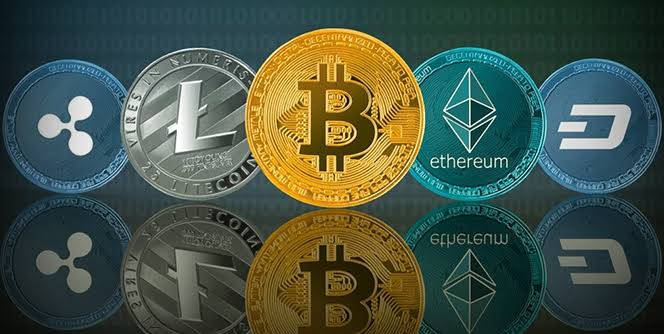
With the internet now reachable from nearly everywhere, cryptocurrency — crypto, as most people call it — started to become widely known some years ago. The sheer drama of the price, plunging and soaring, drew people in, and a growing understanding of the technology behind it turned attention worldwide to a new kind of currency born genuinely out of technology. Gems, oil and minerals are found in the ground, depending on which country happens to be lucky in what lies beneath it.
Crypto, by contrast, came out of a human mind: from advanced mathematics combined with computing. Its inventor saw a way to create something that could be used, and expected it to become widespread and necessary in a borderless, cashless world.
If you are someone who has never invested in anything — never bought a share, never held a fund, never even taken out a savings-type life policy, and perhaps barely uses the internet — then crypto may feel like a black hole or a distant galaxy: you know it is real, but not what it actually is. We have all looked at the sky and wondered where we sit in the galaxy, what the other stars are for, what a black hole really is. For someone who has never invested, crypto feels much the same.
Start with something familiar: shares
Thai people are comfortable with shares because they have been around so long. Put simply: a company trades successfully, reaches a point where it wants to expand and go public, and joins the stock exchange — a central marketplace that lets ordinary people buy into member companies without knowing anyone personally. You do not need to know the owner of CP to own part of CP; you buy whatever portion is offered for sale. You receive dividends in proportion to the shares you hold if the business does well, and you can equally lose out if the business is run into the ground.
The stock market looks solid if you buy and take your return purely as dividends. People lose money on shares because they bought at a higher price than they sold at. There are many reasons someone sells for less than they paid — the price falls so far that they cannot bear the loss any longer and sell to recover something, for instance. That is the stock market: investing in a real company, where profit and loss depend on how well that company is run. Thai people are used to it because it is tangible. If you are a beginner wanting to try it, there is no shortage of material in Thailand to read and learn from. But with little capital there is little profit to be had; it offers a certain level of stability, and it varies with, and is affected by, many economic factors — politics among them.
So what is crypto? Is it less risky than shares?
Not at all. Every investment carries risk. The point of the above is only to show how shares work and where the profit or loss comes from. Crypto is markedly, and substantially, different.
Crypto came about when one man used advanced mathematical formulas to calculate from the fractions of currency circulating around the world, and found that a certain amount of “leftover money” was stranded in these online systems. Say money is transferred from the United States to Thailand: before the transfer the rate is 32 baht to the dollar and the transfer takes two days, but on the day the money arrives the rate is 31. Once the bank has added its charge for the currency risk of the rate falling or rising, and its fees, there is “leftover money” — the difference on that transaction — of 10 satang. The first person to work this out, Satoshi Nakamoto, came upon that “leftover money” through advanced mathematics, began studying it seriously, and named it Bitcoin.
None of this is as strange as it first sounds. The world is full of things that can be bought and sold, because buyers and sellers between them set the price. You do not have to exchange money for money: if you have a quantity of wood and want a quantity of stone, a rate of exchange gets set and the trade happens. Once one person trades wood for stone, others do the same, and an exchange rate exists. As the world moved to notes and coins, rates were set for those too, and prices for the things you buy with them — all depending on what buyers and sellers are content with. You may pay a different price for a bottle of Coke at 7-Eleven than at Lotus. Bitcoin is no different.
Over time Bitcoin gained acceptance, and people in technology began using it, because it is more dependable than a cash flow: the system makes no arithmetic errors, and every transaction can be traced from one end to the other, showing which account sent money to which — without displaying names, only the identifiers the system assigns. That made Bitcoin transactions reliable and highly trustworthy. People with computing knowledge saw the potential to hold a currency they could help create themselves, which is why there are now so many cryptocurrencies on the market, much like the world's various national currencies, each with a price set by demand at that moment. The price per coin therefore differs from one to the next, and cryptocurrency as a group is treated as a set of digital currencies whose value moves sharply, because it is set by the market's appetite at the time.
And the investing? How do people actually make a return?
If the picture is coming into focus: in the stock market you take cash and buy into a real business. Having read where crypto comes from, it is not hard to guess the difference — shares are tangible and move with the economy, while crypto lives in a technology you cannot see but know is there (unless you have the technical knowledge, in which case you can see it perfectly well). So the value of a crypto asset moves on genuine demand. Whoever creates a cryptocurrency and manages to make it popular enough to be widely used will find that currency commands a high price. Bitcoin at one point reached 650,000 baht a coin — and the swings are violent enough that it can fall to a little over 200,000 in a single night.
Speculating in crypto therefore takes a genuinely strong stomach. If you use money you can afford to lose without regret, short-term trading can produce very large gains — and very large losses. Hold for the long term and the main risk you carry is the currency falling out of use altogether; but if that day comes, you are left with nothing.
Does that mean crypto is not safe?
Not at all. Crypto is not unsafe — arguably it is safer than a bank, because every transaction is visible to you. If someone tries to convince you they hold a fortune in crypto, you can check how much they actually have. If someone steals your crypto, you can see which account it went to without filing a report — you can check it in seconds. There is no misdirected transfer, no bank employee helping themselves, no system error, because it is computed entirely by machine with no mistakes in any transaction. The only exception is if you are tricked into sending to someone, and transfer it willingly with your own hands. Every crypto transaction runs on the technology called blockchain — a chain of links — which is why every transaction can be seen accurately and truthfully.
So there is no privacy at all?
That is not right either. What you see is the account number of whoever transacted, not who they are or which country they are in. If a fraudulent transaction happens, you can tell where your money went and where it went next — ten thousand hops later you can still see every one. But you would have to go to the service provider at the final step to find out who took it out. Say you transfer to A, A passes it to B, and B sells it to a company that buys crypto for cash: you would have to go to that company to find out who received it. This is why, when transferring crypto to anyone, you must be certain about that transaction first, because it will never come back.
Where is the advantage in investing, then?
Precisely because of these characteristics, crypto attracts a great many investors. It is in demand for transactions that do not identify the parties, and where demand is high the price follows. You might buy crypto at a few tens of thousands of baht a coin and be able to sell at half a million. That is what creates the speculation and the trade in the spread — and that is the part of it that brings out everyone who understands crypto and can carry its risk.
So: shares or crypto, for a beginner?
Having read all of this — in plain language, with no jargon to trip over, needing no background in computing and none in shares — look at the money in your own pocket and ask whether your life suits shares or crypto better. Then choose that, and try it yourself. Every investment carries risk, and investors should be sure they understand before investing. You now know roughly where shares came from and roughly where crypto came from. If you want to invest seriously, there is a great deal of general material on this subject to read, and it will be easier to follow now — because you know the black hole called crypto is real, and how it works. Whether you walk toward it and out into the future ahead of everyone else is up to you. You may need to read further about the various forms crypto takes, because plenty of people set out before you, and the shapes and mechanisms have multiplied. Now that you know the basics, studying further before investing in any of it will certainly do the money in your pocket some good.

Share:
Bitcoin basics for beginners
Five Bitcoin exchanges Thai traders trusted most in 2019